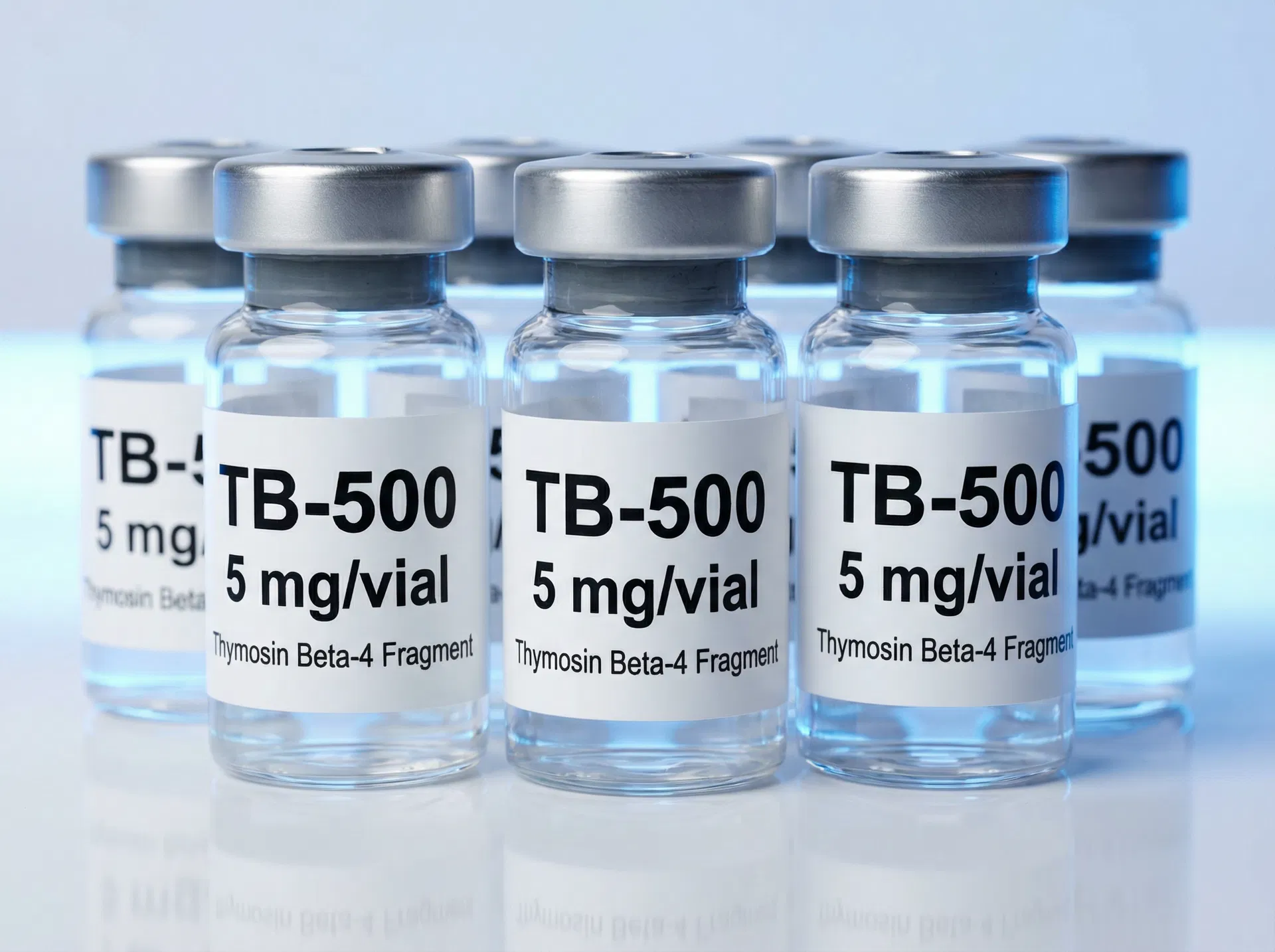
TB-500
Thymosin Beta-4 Fragment
TB-500 is a synthetic peptide fragment of the naturally occurring protein Thymosin Beta-4. It plays a crucial role in actin regulation, cell migration, and tissue repair. Research has shown it promotes healing of heart, skin, eye, brain, spinal cord, and muscle tissue. It is widely used in performance and recovery research for its ability to reduce inflammation and promote flexibility.
Key Benefits
Available Sizes
B2B Wholesale Only · For Research Use Only · COA Provided with Every Order
⚠ Legal Disclaimer: Products sold on this website are for Research Use Only (RUO). These products are not intended for human consumption, use in diagnostic procedures, or for any other clinical or therapeutic purposes. By purchasing, the customer acknowledges that these products are not drugs, medical devices, or supplements, and are to be handled only by qualified professionals in a laboratory setting.
Product Description
TB-500 is a synthetic peptide fragment of the naturally occurring protein Thymosin Beta-4. It plays a crucial role in actin regulation, cell migration, and tissue repair. Research has shown it promotes healing of heart, skin, eye, brain, spinal cord, and muscle tissue. It is widely used in performance and recovery research for its ability to reduce inflammation and promote flexibility.
Amino Acid Sequence
Ac-Ser-Asp-Lys-Pro-Asp-Met-Ala-Glu-Ile-Glu-Lys-Phe-Asp-Lys-Ser-Lys-Leu-Lys-Lys-Thr-Glu-Thr-Gln-Glu-Lys-Asn-Pro-Leu-Pro-Ser-Lys-Glu-Thr-Ile-Glu-Gln-Glu-Lys-Gln-Ala-Gly-Glu-Ser-NH₂
Molecular Information
Request a Wholesale Quote
Fill out the form and our B2B team will respond within 24 hours with pricing, MOQ, and availability for TB-500.
Related Research
Peer-reviewed scientific literature on TB-500 from PubMed, NEJM, The Lancet, and other authoritative sources.
Research Use Only. The following citations are provided for informational purposes and represent independent scientific research. These studies do not constitute medical advice or claims about our products. All products are sold for research purposes only and are not intended for human use.
Thymosin β4 Promotes Cardiac Repair and Regeneration Following Myocardial Infarction
Bock-Marquette I, Saxena A, White MD, et al.
Nature, 432: 466–472 (2004)
Thymosin β4 significantly improved cardiac function post-infarction by activating dormant epicardial progenitor cells, promoting their migration and differentiation into cardiomyocytes, and reducing apoptosis in the infarct border zone.
Thymosin Beta-4 Accelerates Wound Healing in Diabetic Mice and Aged Mice
Philp D, Badamchian M, Scheremeta B, et al.
Wound Repair and Regeneration, 11: 19–24 (2003)
Thymosin β4 significantly accelerated wound closure in both diabetic and aged mice by promoting keratinocyte migration, collagen deposition, and angiogenesis, suggesting therapeutic potential for impaired wound healing conditions.
The Role of Thymosin Beta-4 in Tissue Repair and Regeneration: A Systematic Review
Goldstein AL, Hannappel E, Sosne G, Kleinman HK.
Annals of the New York Academy of Sciences, 1269: 129–137 (2012)
Thymosin β4 functions as a master regulator of tissue repair through its G-actin sequestration activity, promoting cell migration, reducing inflammation, stimulating angiogenesis, and activating progenitor cells in a coordinated healing response.
Citations sourced from PubMed / NCBI, New England Journal of Medicine, The Lancet, Nature, and other peer-reviewed publications. DOI links lead to original publisher pages.