BPC-157
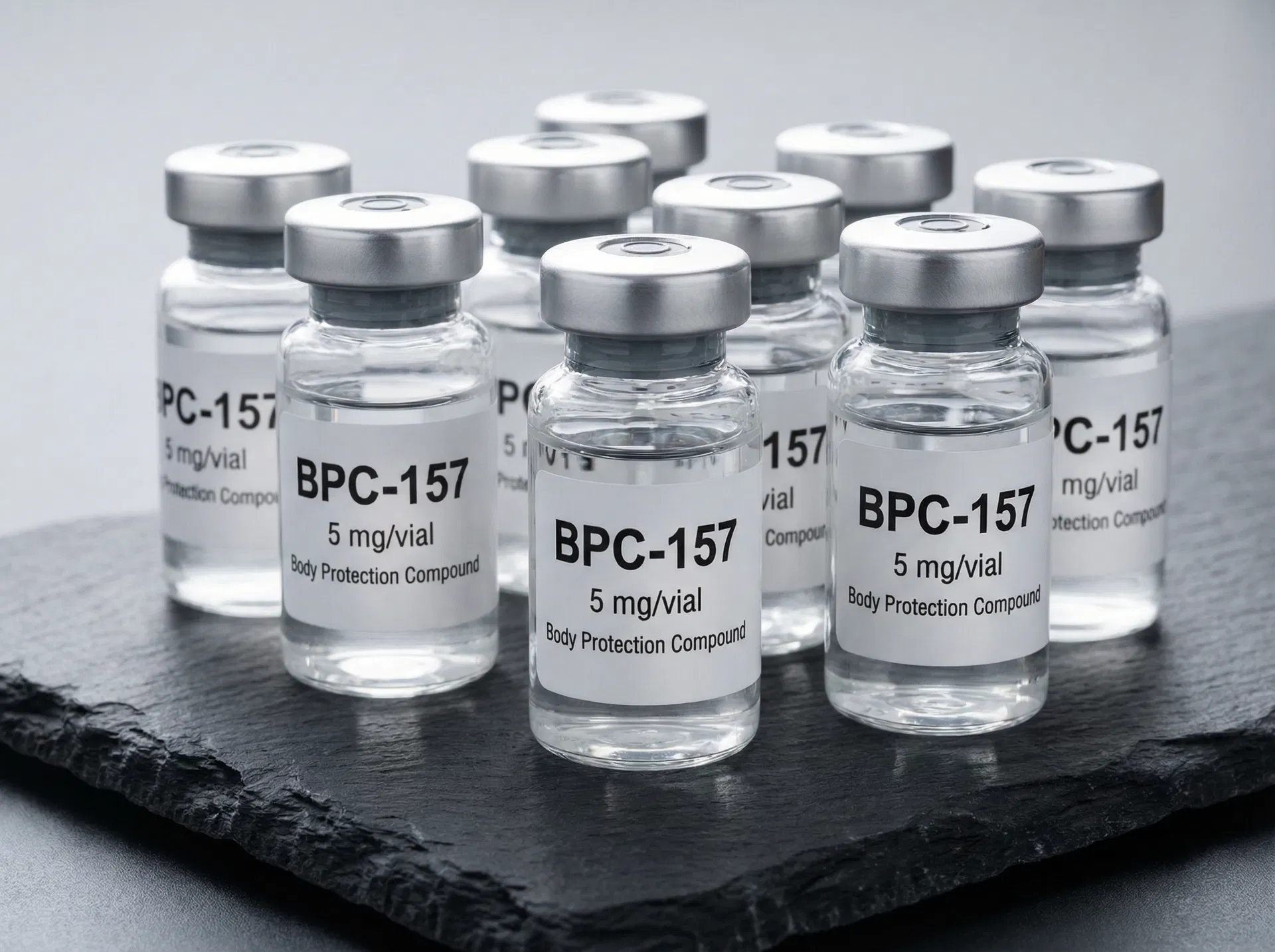
Body Protection Compound 157
BPC-157 (Body Protection Compound 157) is a pentadecapeptide derived from a protective protein found in the stomach. It has demonstrated remarkable regenerative properties in research settings, promoting healing of muscle, tendon, ligament, and bone tissue. Our BPC-157 is synthesized with high purity and is available in both acetate and arginine salt forms.
Key Benefits
Available Sizes
B2B Wholesale Only · For Research Use Only · COA Provided with Every Order
⚠ Legal Disclaimer: Products sold on this website are for Research Use Only (RUO). These products are not intended for human consumption, use in diagnostic procedures, or for any other clinical or therapeutic purposes. By purchasing, the customer acknowledges that these products are not drugs, medical devices, or supplements, and are to be handled only by qualified professionals in a laboratory setting.
Product Description
BPC-157 (Body Protection Compound 157) is a pentadecapeptide derived from a protective protein found in the stomach. It has demonstrated remarkable regenerative properties in research settings, promoting healing of muscle, tendon, ligament, and bone tissue. Our BPC-157 is synthesized with high purity and is available in both acetate and arginine salt forms.
Amino Acid Sequence
Gly-Glu-Pro-Pro-Pro-Gly-Lys-Pro-Ala-Asp-Asp-Ala-Gly-Leu-Val
Molecular Information
Request a Wholesale Quote
Fill out the form and our B2B team will respond within 24 hours with pricing, MOQ, and availability for BPC-157.
Related Research
Peer-reviewed scientific literature on BPC-157 from PubMed, NEJM, The Lancet, and other authoritative sources.
Research Use Only. The following citations are provided for informational purposes and represent independent scientific research. These studies do not constitute medical advice or claims about our products. All products are sold for research purposes only and are not intended for human use.
Stable Gastric Pentadecapeptide BPC 157 in Trials for Inflammatory Bowel Disease and Wound Healing
Sikiric P, Seiwerth S, Rucman R, et al.
Current Pharmaceutical Design, 17: 1612–1632 (2011)
BPC 157 demonstrated consistent healing promotion across tendon, ligament, bone, and gastrointestinal tissue in over 30 preclinical studies, with a remarkable safety profile and no observed toxicity at therapeutic doses.
BPC 157 Counteracts QTc Prolongation Induced by Haloperidol, Fluphenazine, Clozapine, Olanzapine, Quetiapine, Sulpiride, and Metoclopramide in Rats
Vukojevic J, Milavic M, Perovic D, et al.
Life Sciences, 291: 120302 (2022)
BPC 157 effectively counteracted QTc prolongation and associated arrhythmias through its NO-modulatory properties, suggesting broad cytoprotective effects extending to cardiac tissue.
Tendon Healing with BPC 157: Histological and Biomechanical Assessment in a Rat Achilles Tendon Model
Chang CH, Tsai WC, Lin MS, et al.
Acta Histochemica, 113: 651–656 (2011)
BPC 157-treated tendons showed significantly improved collagen organization, increased fibroblast proliferation, and superior biomechanical strength at all time points compared to controls, supporting its role in accelerating tendon repair.
Citations sourced from PubMed / NCBI, New England Journal of Medicine, The Lancet, Nature, and other peer-reviewed publications. DOI links lead to original publisher pages.