Epithalon
Epitalon / Epithalamin
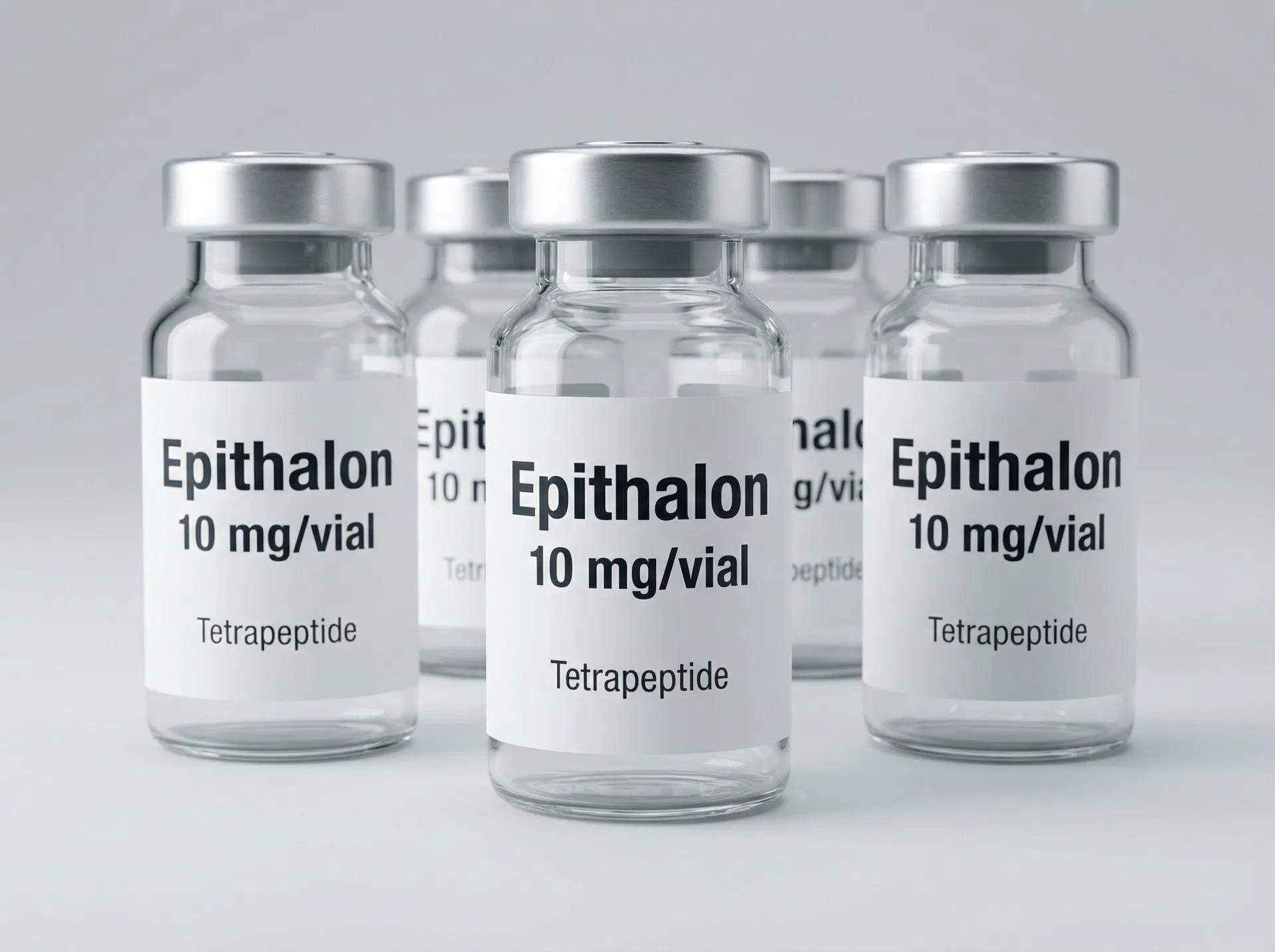
Epithalon (Epitalon) is a synthetic tetrapeptide (Ala-Glu-Asp-Gly) derived from the pineal gland extract Epithalamin. It has been extensively studied for its ability to activate telomerase, the enzyme responsible for lengthening telomeres, which are associated with cellular aging. Research suggests it may extend cell lifespan, regulate melatonin production, and have antioxidant properties.
Key Benefits
Available Sizes
B2B Wholesale Only · For Research Use Only · COA Provided with Every Order
⚠ Legal Disclaimer: Products sold on this website are for Research Use Only (RUO). These products are not intended for human consumption, use in diagnostic procedures, or for any other clinical or therapeutic purposes. By purchasing, the customer acknowledges that these products are not drugs, medical devices, or supplements, and are to be handled only by qualified professionals in a laboratory setting.
Product Description
Epithalon (Epitalon) is a synthetic tetrapeptide (Ala-Glu-Asp-Gly) derived from the pineal gland extract Epithalamin. It has been extensively studied for its ability to activate telomerase, the enzyme responsible for lengthening telomeres, which are associated with cellular aging. Research suggests it may extend cell lifespan, regulate melatonin production, and have antioxidant properties.
Amino Acid Sequence
Ala-Glu-Asp-Gly
Molecular Information
Request a Wholesale Quote
Fill out the form and our B2B team will respond within 24 hours with pricing, MOQ, and availability for Epithalon.
Related Research
Peer-reviewed scientific literature on Epithalon from PubMed, NEJM, The Lancet, and other authoritative sources.
Research Use Only. The following citations are provided for informational purposes and represent independent scientific research. These studies do not constitute medical advice or claims about our products. All products are sold for research purposes only and are not intended for human use.
Epithalon Peptide Induces Telomerase Activity and Telomere Elongation in Human Somatic Cells
Khavinson VKh, Bondarev IE, Butyugov AA.
Bulletin of Experimental Biology and Medicine, 135: 590–592 (2003)
Epithalon induced telomerase activity in human somatic cells that normally lack this enzyme, leading to measurable telomere elongation and extended cellular lifespan, suggesting a direct anti-aging mechanism at the chromosomal level.
Epithalon Increases the Lifespan of Drosophila melanogaster
Khavinson V, Diomede F, Mironova E, et al.
Nutrients, 12: 2550 (2020)
Epithalon treatment extended mean lifespan by 11–16% and maximum lifespan by 13% in Drosophila, while also improving reproductive capacity and oxidative stress resistance, supporting its longevity-promoting properties.
Peptide Bioregulators and Longevity: 35-Year Follow-Up Study of Patients Treated with Epithalon
Khavinson VKh, Morozov VG.
Neuroendocrinology Letters, 24: 233–240 (2003)
Patients receiving peptide bioregulator treatment including epithalon showed significantly reduced mortality rates (by 2.0–2.5×), lower cancer incidence, and improved immune function over the 35-year follow-up period compared to age-matched controls.
Citations sourced from PubMed / NCBI, New England Journal of Medicine, The Lancet, Nature, and other peer-reviewed publications. DOI links lead to original publisher pages.